Graphing Data with Year 2s


Graphing Data Packs are a fun way to teach young students the higher order questioning skills required for interpreting data. All packs are aligned with the Australian Curriculum (ACARA) for Year 2 Maths. 

I've used these visuals to ask the students each day 'How did you get to school today?' and record their responses with pictures on the whiteboard (I laminate the pictures and attach magnets to the back to make them easy to throw up on the whiteboard). I then sort the pictures into rows (or get a student to help me) and then we place numbers up the side and titles down the bottom. We then collectively create a title for the picture graph and the students record their data into their daily flip book (included). At the end of the week we look over our results and draw some conclusions about what the data is telling us by filling in the summary sheet. Afterwards we create a poster for the week to advertise the results of our data collection - the winning travel method that week was.. etc..  You can use this pack each week and really get to the stage where you don't need to do much instructions with young students and they can demonstrate their learning by themselves. 

This pack contains survey forms and is a great introduction to developing a survey with very simple options on a 'yes' or 'no' basis and... who doesn't love ice cream?

This pack as the same format as the ice cream pack (contains a 'yes' and 'no' survey), however, the options given move students up towards higher order thinking. You might brainstorm questions for the survey such as 'what type of meat would you like?' or you might discuss with students if mayo should be on a separate survey form as a condiment rather than a filling. Lots of possibilities with this pack and again a chance for students to display their learning with a classroom poster.

This pack as the same format as the sandwich and ice cream packs but the questions may be more complex or perhaps more seasonal. There are lots of teaching opportunities with students here to move their thinking to higher order questions, open or closed questions and appropriateness of questions verse answers given. This also makes a fun end of year activity.

Save money by purchasing all 4 packs in the bundle!


Using flip books to reinforce maths concepts

Prepare yourself for a mini-rant. I don't mind mandated teaching materials (*cough* C2C *cough*) however, what burns my buns is the speed at which you are forced to rush through larger maths concepts such as fractions.

Reinforcing the concept of fractions i.e the basic concept of parts of a whole, is essential to developing student understanding further down the track when they are required to add, subtract and multiply fractions. 

So I created these little Fraction Flip Books to assist students with solidifying their learning of fractions in an independent way.

In particular, what I like about these little flip books is they work right across grades 2 through 5 to help students consolidate and demonstrate their learning of fractions.

In addition, they are so easy for students to put together and spend some time on. They can keep them in their desk for when they finish work early (don't you just love those fast finishers in a class of 29 students!) or use them in maths rotations.

I especially love using the maths story to show a real world connection to fractions, which I often use as a mini formative assessment tool. Do they really understand that all parts they cut up must be equal in size to be a correct representation of a fraction?


Grab your fraction booklet by clicking here My Fraction Flip Book Bundle


Geography Resources that are aligned to the Australian Curriculum

geography, unit, history, acara, hass, australian, australia, curriculum, teaching, teachers, download


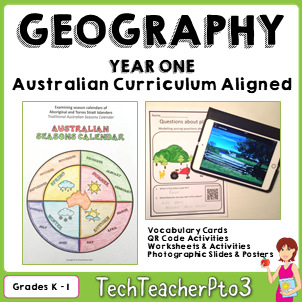
Geography concepts can be difficult to explain to young students and some of the biggest concepts covered in the Australian curriculum for Foundation - Year 3 are no exception. Concepts such as geographic features, places and spaces, caring for places and Indigenous connections to the land are all covered in the TechTeacherPto3 Geography Packs.
geography, unit, history, acara, hass, australian, australia, curriculum, teaching, teachers, download

geography, unit, history, acara, hass, australian, australia, curriculum, teaching, teachers, downloadgeography, unit, history, acara, hass, australian, australia, curriculum, teaching, teachers, downloadgeography, unit, history, acara, hass, australian, australia, curriculum, teaching, teachers, download

What are places like? What makes a place special? How can we look after the places we live in?


geography, unit, history, acara, hass, australian, australia, curriculum, teaching, teachers, download

geography, unit, history, acara, hass, australian, australia, curriculum, teaching, teachers, downloadgeography, unit, history, acara, hass, australian, australia, curriculum, teaching, teachers, downloadgeography, unit, history, acara, hass, australian, australia, curriculum, teaching, teachers, download

• Pose questions about people and places: hospital, farm, school
• Environment and change (past/present home, school, farm)
• Natural, managed and constructed features/places
• Locate and explore places and why (space)
• How places are cared for (beach, forest, campsite, school, farm)
• The different features of places
• How the features of places have changed
• How Aboriginal and Torres Strait Islander Peoples connected to places


geography, unit, history, acara, hass, australian, australia, curriculum, teaching, teachers, download

geography, unit, history, acara, hass, australian, australia, curriculum, teaching, teachers, downloadgeography, unit, history, acara, hass, australian, australia, curriculum, teaching, teachers, downloadgeography, unit, history, acara, hass, australian, australia, curriculum, teaching, teachers, download


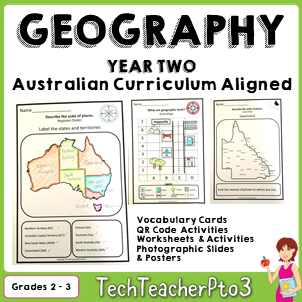
Geography Unit Year 2 Maps: Local, Regional and National Scale


• Map of the world (place, space, environment) where they are locate in relation to Australia
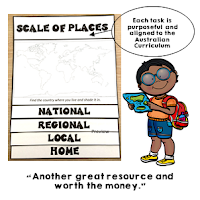
• Hierarchy of scale – personal, local, regional and national
• How places have meaning for Aboriginals and their connection to their land?
• How are people connected to their place and other places?• What factors affect my connection to places?

geography, unit, history, acara, hass, australian, australia, curriculum, teaching, teachers, download

geography, unit, history, acara, hass, australian, australia, curriculum, teaching, teachers, downloadgeography, unit, history, acara, hass, australian, australia, curriculum, teaching, teachers, downloadgeography, unit, history, acara, hass, australian, australia, curriculum, teaching, teachers, download


• How and why are places similar and different?
• Similarities and differences between places within and outside Australia through a study of their environmental and human characteristics (place)

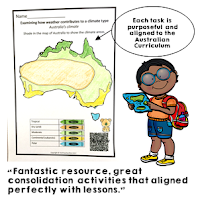
• Climate (environment) and the types of settlements (space) in Australia


In addition, you'll find many other useful Geography resources at TechTeacherPto3.


How to use QAR questions to explore a text

how to use qar questions to explore a written text using reading comprehension strategies with question and response activities in English language arts

Do you know how to use QAR (question and response) questions when exploring a text with students?

Let me show you how I use QAR and retells to help students to think critically about a text and ensure reader comprehension. 

How to use QAR questions to explore a written text using reading comprehension strategies with question and response activities in English language arts. Where the forest meets the sea by Jeannie Baker

Using the text Where the Forest Meets the Sea by Jeannie Baker, a picture book, students can explore visual comprehension with QAR. You can watch a video on how to use this reading strategy here but it's a nice and easy approach to use with young students.

You can find the files shown in this blog post here.

How to use QAR questions to explore a written text using reading comprehension strategies with question and response activities in English language arts. Where the forest meets the sea by Jeannie Baker


Here is a breakdown of the strategy in visual form:

How to use QAR questions to explore a written text using reading comprehension strategies with question and response activities in English language arts. Where the forest meets the sea by Jeannie Baker

There are four types of questions in the QAR reading strategy:

RIGHT THERE
The answer is right there in the text.

THINK AND SEARCH
The answer is in the text but it's not obvious, you will need to look for implied meaning.

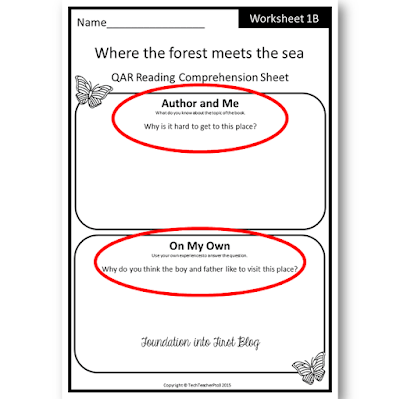
AUTHOR AND ME
The answer is not in the text but you need to think about the author's point of view and your point of view about this topic.

ON MY OWN
The answer is not in the text but you will need to use your own understanding about this issue to consider an answer.

One of the reasons I love this reading strategy so much is its simplicity! Students also love trying to figure out what is a 'right there' question and what is a 'think and search'. Sometimes it's good to give them a answer and reverse it, by getting them to name the type of question that would go with that answer!

Here is how I use QAR with Where the Forest Meets the Sea by Jeannie Baker.

How to use QAR questions to explore a written text using reading comprehension strategies with question and response activities in English language arts. Where the forest meets the sea by Jeannie Baker

How to use QAR questions to explore a written text using reading comprehension strategies with question and response activities in English language arts. Where the forest meets the sea by Jeannie Baker

I also level the questions by taking them higher and deeper for higher level kids such as: 

How to use QAR questions to explore a written text using reading comprehension strategies with question and response activities in English language arts. Where the forest meets the sea by Jeannie Baker

QAR is particularly useful for moving learners up or down in the hierarchical scale of thinking, another reason I love it so much!

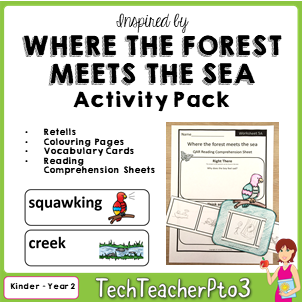
You'll find these sheets, retells and many more activities for the book in this pack here

How to use QAR questions to explore a written text using reading comprehension strategies with question and response activities in English language arts. Where the forest meets the sea by Jeannie Baker

ANZAC Day Activities for the classroom

The Australian History Curriculum (ACARA) asks students to make connections to the past through posing questions and exploring events. In particular, ACARA asks Year 3 students to examine significant events in Australian history, such as ANZAC Day which is held on the 26th April every year.

This ANZAC Day Activity Pack provides students with several different opportunities to assess their understanding of this commemoration and display their knowledge of this event in the classroom.


Posters and Word Walls are a perfect accompaniment to discussions and the craft activities allow students to display their work on internal or external classroom walls. 

Worksheets can double as assessment items (answer sheets provided) and come with mapping components. The ANZAC Biscuit recipe and recount sheets give students a real taste of ANZAC life with a fun word search on these key vocabulary words. Lastly, students can write to an ANZAC in 1915 (using their knowledge of life in the past) or a present day war veteran (applying knowledge of current commemorations, symbols and activities) to demonstrate their understanding.


https://www.teacherspayteachers.com/Product/ANZAC-Day-Activity-Pack-Craft-Word-Search-Worksheets-Posters-and-more-2428832