Building student engagement with Whole Brain Teaching


If you've never heard of Whole Brain Teaching (WBT) then let me introduce you to the best way I've found to hold students' attention while learning.

I stumbled upon WBT in 2014 and immediately tried it out with my students. I was so excited to find an interactive and fun way to keep them engaged in learning while I was teaching. WBT is a certified training course you can undertake and there are levels of attainment you can work towards, of which I have done none. However, there are some simple tricks WBT has that are super easy to use in your classroom today to keep students engaged.

Let me show you a few of my favourite techniques...

One: Get their attention

This is the first technique I used with WBT on my students and you're probably familiar with call outs and call backs when you want to get their attention. I use:


T: class, class, class
S: yes, yes, yes

and you can funk that up a bit sometimes to:

T: classity, class, class
S: yesity, yes, yes

and so on... the point is to train them to stop and repeat. If you aren't already using this system of ' 'attention getting' you should start now - it really works and you can use it anywhere. The key is to keep the students' attention.

Two: Mirror Words

Teach students 'mirror words' by using a hand gesture or movement whenever those words are said. Watch the video below and notice that this is a student who has been trained in this technique already. She repeats the chant learnt in class and uses the mirror words, the students in the class chant it back and use the same movements with their hands. This reinforces their memory of these concepts by using a different part of the brain (i.e. using their whole brain). Notice how, as the camera pans around the room, every single child in that class is doing the actions. Nobody is gazing out the window and behaviour is completely focused on repeating the chant with the actions.

Tip: If you have hearing impaired students in your room you might like to try and learn some sign language and use this. When I taught in classes with hearing impaired students I would take the time to learn the necessary signs and use these instead as it also teaches the other students in the room some basic signs they can use as well!


Three: Teach, Okay

This is my favourite part of WBT, getting the students to teach each other! You know yourself, there is no quicker way to learn something than when you have to teach it to somebody else! Students are the same. The minute they are asked to teach key concepts to another student they suddenly become the 'teacher' and they all love that! It's important to state the objective very clearly once they are paired up (the old fashioned term might be 'think, pair, share' however this is slightly different as there is no sharing at the end). 

T: class, class, class
S: yes, yes, yes

T: find a partner and hold their hand up when you're ready

T: today we have been learning that a noun is a person, place or thing. I want you to tell your partner what a noun is and give them 5 examples, then switch - *claps hands three times* teach
S: *clap hands three times* okay!

This is when WBT becomes a better strategy than 'think, pair, share' because the teacher can then walk around the room and listen. Listen to what students are saying. Are they on task? Are they correct in their examples? It's a perfect way to gain instant feedback for a strategy you have just taught and guess what, they are teaching themselves so they are not just listening to your voice all the time!

Hint: For higher level students I will often listen and then give them an extension activity such as 'Okay, now I want you to use those nouns in a compound sentence'. Lower students will benefit from some one-on-one you'll be free to give them during this time and you can even pair with them.

This video below shows the Teach, Okay technique (btw how cute is the little girl at the front who turns around and sees the teacher with the camera in her hand 'what are you doing?'!)


There are many more advanced techniques but these are the three that I really love and are quick to train students in. Try them next time you teach and come back and tell me how the lesson went. I'd love to know!

To finish here is my favourite WBT video as it's such a great example of WBT in practice. Enjoy.


5 Quick and easy Mother's Day activities for your early years classroom

mothers day, mothers, mother, mum, mummy, mom, day, celebration, celebrate, family, teaching, teacher, resources, gifts, gift ideas, students, student


It's often difficult to squeeze in Mother's Day activities into an already crowded curriculum but there is real value in making time to recognise seasonal celebrations.

Listed below are 5 of my favourite ways to bring Mother's Day into my classroom.

1. Mother's Day is a cultural celebration - what is a celebration and how have mothers' roles changed over the years?

The study of celebrations are the basis for most History, Geography or Civics studies as an understanding of cultural celebrations, their purpose and their impact on the lives of people around them has deep meaning for countries and cultures. If you want your students to understand the difference between a celebration and a commemoration click here

In Foundation Year HASS, students explore the purpose of Celebrations and sequence these events.

mothers day, mothers, mother, mum, mummy, mom, day, celebration, celebrate, family, teaching, teacher, resources, gifts, gift ideas, students, student

In Year 1 HASS, students explore family structures and roles. It is especially interesting to look at the mother's role in the family and how this may have changed over the years.

mothers day, mothers, mother, mum, mummy, mom, day, celebration, celebrate, family, teaching, teacher, resources, gifts, gift ideas, students, student


In Year 2 HASS, students explore changes in technology and think about Then and Now of items such a clothing (shown below). What technology around the house does your mother use now compared to the past? Has it changed your mother's life? How does your mother's dress compare to mothers in the past?

mothers day, mothers, mother, mum, mummy, mom, day, celebration, celebrate, family, teaching, teacher, resources, gifts, gift ideas, students, student


And in Year 3 HASS, students examine ways in which a celebration is different to a commemoration. What makes Mother's Day a celebration? How is it symbolised in society?

mothers day, mothers, mother, mum, mummy, mom, day, celebration, celebrate, family, teaching, teacher, resources, gifts, gift ideas, students, student

2. Read a Mother's Day picture book and explore some of the key vocabulary connected with mothers. What do mothers do? How do other people celebrate Mother's Day?

Nothing beats a good picture book for Mother's Day and here are a few of my favourites! Picture books are a great way help students understand key vocabulary terms so make sure you double up on that story time by integrating the book with your social studies (HASS) lessons.  
mothers day, mothers, mother, mum, mummy, mom, day, celebration, celebrate, family, teaching, teacher, resources, gifts, gift ideas, students, student

3. Mother's Day craft - there is never a more perfect time in the school calendar than Mother's Day to get funky with some fun hands on craft ideas.

mothers day, mothers, mother, mum, mummy, mom, day, celebration, celebrate, family, teaching, teacher, resources, gifts, gift ideas, students, student

This Mother's Day Flower Card is so easy to make - download the template here.

4. Create some Mother's Day Gift Coupons/Vouchers

mothers day, mothers, mother, mum, mummy, mom, day, celebration, celebrate, family, teaching, teacher, resources, gifts, gift ideas, students, student

While making connections to chores that are done around the house (see Year 1 HASS: History) it is a great way to discuss what chores they could offer to do for their mother on Mother's Day. View them here.

5. Whip up a super fast poster

If you're are super time poor, why not try a quick poster print out. No prep. No fuss. Download this freebie here
mothers day, mothers, mother, mum, mummy, mom, day, celebration, celebrate, family, teaching, teacher, resources, gifts, gift ideas, students, student

Win a HASS History and Geography Mega Bundle!


As an author of educational resources, I strive to provide the best quality teaching materials to meet your needs. 

All of TechTeacherPto3's products are aligned to the Australian Curriculum. HASS (History and Geography) products for Foundation Year to Year 3 are already available from TechTeacherPto3 store. 

However, I want to know what you would like next?

I've had requests for Year 4 History and Year 6 Geography... what do YOU need in YOUR classroom to help YOU teach your subjects in line with the curriculum?

I'm giving away 1 x copy of the HASS Mega Bundle which contains over 450 pages of materials for teaching Foundation, Year 1, Year 2 and Year 3 Geography and History and is valued at $40.

To enter all you have to do is:
  1. Click this link to the Survey here.
  2. Tell me what you think in the survey.
  3. Give your email address at the end so you can enter the draw (entries are subscribed to the Foundation into First mailing list if you are not already subscribed).
  4. Check back on the TechTeacherPto3 Facebook Page, Instagram Account or back here on the blog to see the winner announced on the 1st May.

One entry per person,
Competition runs from 1st April until 30th April 2017.
Winner will be announced on all of TechTeacherPto3's social platforms 1st May 2017 and the winner will be notified by email with their downloadable product attached.


UPDATE 1st MAY 2017
and the winner is...


Exploring ANZAC Day in Early Primary

ANZAC Day, Activities, Kids, Children, Early years, Primary school, primary, teaching, teachers, teachers pay teachers, history, social studies

Discussing ANZAC Day (Australia and New Zealand Army Corps Day) can be difficult with young students due to its possibly distressing content of war and death. However, it's essential that young students understand the importance of this commemoration on the 25th April every year for both Australia and New Zealand. In this blog post you will find some suggestions for introducing the big concepts around ANZAC Day into your early years classroom in a sensitive and appropriate manner. As I am an Australian teacher I have only covered the ANZAC Day concepts from the Australian perspective. However, feel free to leave some links to resources for New Zealand teachers in the comments section below.

Gallipoli was a long way to travel.
This is a difficult concepts for very young students to grasp but it is an important one to cover. Young men were sent a long way away from their families to a place they had never been to. Some never came home - this is why we remember them. 

The example below is from the ANZAC Day Activity Pack where students can locate Gallipoli on the map and consider its distance from Australia. 

ANZAC Day, Activities, Kids, Children, Early years, Primary school, primary, teaching, teachers, teachers pay teachers, history, social studies

What does ANZAC Day mean to you?
A good writing activity after your lesson on the ANZACs, is to have students write a response about what ANZAC Day means to them. Try this craft (pictured below) from the ANZAC Day Activity Pack where students can place their writing for a wall display in the classroom.

ANZAC Day, Activities, Kids, Children, Early years, Primary school, primary, teaching, teachers, teachers pay teachers, history, social studies

ANZAC Day is a commemoration not a celebration.
Do your students understand the difference between a commemoration and a celebration? This is a big concept to cover when discussing ANZAC Day but another important one. How we behave during a celebration is different to a commemoration, however, there are some similarities. This is a great activity to use when discussing the ways in which ANZAC Day is commemorated and is covered in detail in the HASS Year 3 History Unit (seen below). 

ANZAC Day, Activities, Kids, Children, Early years, Primary school, primary, teaching, teachers, teachers pay teachers, history, social studies

Bake some ANZAC Day biscuits.
Discussing life in the trenches is hard but this book by Phil Cummings and Owen Swan called ANZAC Biscuits is a lovely tale of a little girl and her father's life in the trenches. She bakes some cookies for him and her life in the warmth of the home is compared to the life her father is having at the same time in the trenches. 

ANZAC Day, Activities, Kids, Children, Early years, Primary school, primary, teaching, teachers, teachers pay teachers, history, social studies

You can also bring in or bake some ANZAC biscuits and this can form the basis of your study of method or sequencing. A method recount and recipe can be found in the ANZAC Day Activity Pack.

ANZAC Day, Activities, Kids, Children, Early years, Primary school, primary, teaching, teachers, teachers pay teachers, history, social studies

Discuss the concept of bravery.
What does it mean to be brave? What does bravery look like? Explore the concept of bravery with this lovely book by Jane Barclay called Proud as a Peacock, Brave as a Lion. It is a very touching book where animals display the qualities service men display either in battle or after war. It's also a great book for exploring what it means to be proud, both key concepts when discussing ANZAC Day.

ANZAC Day, Activities, Kids, Children, Early years, Primary school, primary, teaching, teachers, teachers pay teachers, history, social studies

Another great idea for early years students is to use these fantastic colouring pages to explore the difficult concepts of ANZAC Day such as how brave the ANZAC men were to live in the trenches under gun fire or how women also went to Gallipoli. 


ANZAC Day, Activities, Kids, Children, Early years, Primary school, primary, teaching, teachers, teachers pay teachers, history, social studies


Read a book with an ANZAC theme
Listed below are some of my students' favourite books on ANZAC Day and World War 1.

ANZAC Day, Activities, Kids, Children, Early years, Primary school, primary, teaching, teachers, teachers pay teachers, history, social studies, picture books,


4 Easy way to celebrate Harmony Day in the classroom


4 Ways to celebrate Harmony Day in the classroom.

“Everyone belongs” is a great message of inclusivity in the classroom. It’s also the message for Harmony Day, a fantastic celebration for the whole community recognising diversity as a positive aspect of children’s lives. In fact, with the current state of the world, Harmony Day is a very powerful message to send to students young and old that all races, colours and beliefs can live in harmony. 

What is Harmony Day?
Harmony Day is a nationally recognised day for acknowledging the diversity in our society and celebrating it. 

When is Harmony Day held?
21st March each year.

What is the aim of Harmony Day?
To celebrate diversity and promote inclusion in society. Everyone belongs – is the message used to promote Harmony Day.

When did Harmony Day begin?
The very first Harmony Day began in 1999 and coincides with the United Nations International Day for the Elimination of Racial Discrimination. 

How is Harmony Day celebrated?
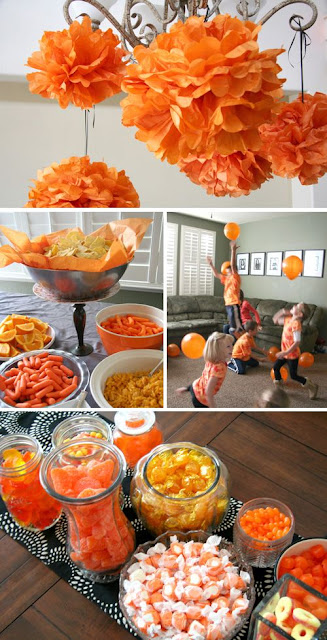
Schools often hold a whole school assembly with significant people from the community as representatives. Other community organisations hold morning teas or lunches to celebrate. The colour orange is used with Harmony Day to show support for the day through the wearing of orange t-shirts, ribbons or other decorations. 

How can I bring this celebration into my classroom?

1. The Harmony Day Activity Pack is full of colour posters, map activities, worksheets and display materials to help you discuss this special day in your classroom.


2. You might like to create some art work that shows the diversity within your classroom.

4 Ways to celebrate Harmony Day in the classroom.

4 Ways to celebrate Harmony Day in the classroom.

3. You could read a book about diversity.

4 Ways to celebrate Harmony Day in the classroom.


4. Finally, it’s always fun to bring some lovely treats into the classroom (it is a celebration after all) – don’t forget the orange theme!

4 Ways to celebrate Harmony Day in the classroom.

However you choose to celebrate – have a great Harmony Day!


4 Ways to celebrate Harmony Day in the classroom. #teacherblog #teacher #harmonyday #australia