Ten ways to survive, when your teaching team fails to work cooperatively


Ten ways to survive, when your teaching team fails to work cooperatively

When a teaching team fails to work cooperatively, how do you survive the school year?

Teaching, as with any workplace, is filled with highs and lows, big personalities and uncooperative people that you must deal with on a daily basis. The following stories come from chats I've had with my fellow teaching friends. I felt this issue was rarely discussed among teachers and needed to be said.

When your team rocks!
When you work in a powerful team of teachers that are not only cooperative but are as excited about teaching as you are it can be an uplifting experience. Good teaching teams support and encourage each other. They share ideas openly and debrief, pick apart and dissect what worked and what didn't. It can be the most exciting time you can have as a teacher and one where you feel like you are growing and learning more than ever.

When your year level team sucks.
Have you been in a year level that is full of jaded teachers? Not only are they unwilling to share their ideas but they are reluctant to consider new ideas. In this team, new ideas are to be avoided at all costs. Information is not shared and fellow year level teachers rarely know what is going on - these golden nuggets of information are closely guarded by the Year Level Head who is often nowhere to be found. Everybody moans and hates their job. Everybody hates parents and the kids are frequently called 'dumb'. Moderation rarely happens and when it does you find out everybody approached the assessment differently and none of you have marked the same way. This is a poor functioning team but what can you do? Often you're not in a position to complain to the Principal and it is more than likely they already know what is going on (they see more than you realise). Does this scenario sound familiar?

What can YOU do?
Firstly, there is very little you can do within your team to change the dynamics. Sometimes it helps to find a co-worker you can share ideas with but sometimes the team environment is so toxic this only makes things worse. So you bunker down, close the door and stop trying to get involved. Regardless of how this impacts on your growth as a teacher, the main concern is how do you protect your mental health until your work situation changes?

Whilst pinning the other day (see my boards here), I stumbled upon this pin and as I read it I realised it could be used as a step by step guide to how to survive a toxic teaching environment. Let's take a look...

Ten ways to survive, when your teaching team fails to work cooperatively

TEN WAYS TO SAVE YOUR SANITY IN A TOXIC TEACHING ENVIRONMENT

1. Don't give advice unless asked. This is brilliant advice but one I totally suck at so I'm still learning. I often fall into the trap of nodding and agreeing with a moaning co-worker then jumping in to give advice. Advice is seldom often asked for and when offered can appear preachy. Wait for your co-worker to ask for advice and then tell them you'll think it over and get back to them. This will stop your discussion appearing bitchy or gossipy in, what is already, a toxic work environment. 

Ten ways to survive, when your teaching team fails to work cooperatively


2. Leave the room if you can't be quiet. Yep another one I'm really no good at but I'm learning to hold my tongue. When you come from a teaching team that is open to discussion and airing problems it can be confronting to move to a team where opinions are judged with high suspicion. One of my closest teaching pals is an expert at holding her tongue and I am trying to be more like her.

Ten ways to survive, when your teaching team fails to work cooperatively

3. Focus on yourself and what you should be doing, not what they are doing wrong. They didn't teach the curriculum as agreed - let it go. They did a different assessment than the one discussed - let it go. Remember, you're in a toxic work environment and self-preservation is paramount. Concentrate on what you do and do it well. Leave karma (or admin) to catch up with lazy teachers. Which falls nicely to number four...

Ten ways to survive, when your teaching team fails to work cooperatively


4. Let them experience their own choices. Chances are admin are fully aware of the lazy teacher, the poor Year Level Head or the bad group dynamics at your school. Principals see and hear everything, even if they don't tell you. Eventually admin will gather enough dirt on these teachers and either split the group by moving teachers to new year levels (or new schools!). Chances are you might move to a more productive team and get your teaching mojo on again. 

Ten ways to survive, when your teaching team fails to work cooperatively


5. Stop focusing on their behaviour. When a team member appears reluctant to new ideas, won't share ideas or refuses to work as part of a team, remember the behaviour is often a consequence of other issues. Perhaps they used to share their work all the time before a fellow teacher took credit for their work? Perhaps they are having a terrible time at home and are feeling too low to be cooperative at work? Whatever their reasoning for their behaviour, recognise that there are factors beyond your control at play in their behaviour and don't take it personally. They probably have never seen a good teaching team in action before.

Ten ways to survive, when your teaching team fails to work cooperatively

6. Remove the kids before it becomes unsafe. Okay this one didn't, at first, feel like it applied to team teaching but then I realised the way poor team teaching impacts on the students. Students, like all children caught between quarreling parents, see and hear EVERYTHING. They see the look you give another teacher (you know that eye-roll of 'they're at it again'). They hear the tone in your voice when you say "oh okay, nobody told me that was happening today!". It all impacts on their self-esteem like the child of a divorcing couple (Am I worthwhile?) and it all goes home to their parents (You'll never guess what teacher X said about teacher Y!). Whatever discussions develop, keep the students at the forefront of your mind and keep the fallout to a minimum for those in your class.

Ten ways to survive, when your teaching team fails to work cooperatively

7. Don't nag them about their responsibilities. This one falls under the 'let it go' criteria again. They haven't run the assessment the same way - yep just let it go. See point 3, 4 and 5 above.

Ten ways to survive, when your teaching team fails to work cooperatively

8. Only help when asked. Even in the bad team environment, where I keep my door closed to prevent the bad juju vibes entering my classroom, I will invariably hear a knock on the door at some point. Teachers, when desperate, will seek help and just use it as a chance to demonstrate to your fellow team member, the benefits of cooperative team teaching.

Ten ways to survive, when your teaching team fails to work cooperatively

9. Compliment what they ARE doing well. This can feel like Mission Impossible but when the difficult team member actually does something well, don't hesitate to compliment them. They will be shocked at first, then suspicious (what is she really doing?) but they might, just might, repeat that good work again. You use positive reinforcement with your students, so why not try it on your teaching team? It might not improve their behaviour but it may just help you see some good in their work rather than just focusing on the bad.

Ten ways to survive, when your teaching team fails to work cooperatively

10. Let yourself off the hook, it's not your problem! I really love this last one. At the end of the day, their behaviour, their teaching, their students are their problem. You can't control everything but you can control how you react to it so take a deep breath - gather your fabulous lesson plans and say "not my circus, not my monkeys" and focus on your own students.

Ten ways to survive, when your teaching team fails to work cooperatively


Ten ways to survive, when your teaching team fails to work cooperatively #techteacherpto3 #foundationintofirst #teacherblog #teachertips #teacherhelp


Celebrating teacher diversity


It's report card writing time. That dreaded time of the year when teachers summon enough strength to gather their thoughts and put them on paper in a meaningful and non-accusatory way. For Australian and New Zealand teachers, we are day-dreaming of our winter mid-term holidays and it doesn't help that we are bombarded with teacher memes about end of year and summer break (I'm talking to you American and Canadian teachers!). 

Okay, I've lived all over the world and have family in the US so totally understand the excitement and anticipation of summer holidays. In countries where the sun rarely makes an appearance, I clearly remember the longed-for long summer days. As a fellow teacher, I would never begrudge you your excitement about the end of year either.

However, spare a thought for your poor fellow teachers in the southern hemisphere who are mid-way through the school calendar, feeling exhausted and wondering if it's too early to start doing a countdown to the end of the school year in December. 

Which brings me to my blog post. How much do you know about your fellow teachers outside of the country you live/work in? I will confess my ignorance of some of the words or terms that are used in US English but I know that when I'm talking about bringing some thongs on a holiday excursion I have to make it clear they are the ones that go on my feet when I'm talking to an American! Bum-bags are commonly known as fanny-packs in the US (let's not go there...) and rooted means a solid foundation in the US, whereas in Australia it means.. er.. broken. As in "...your car is totally rooted mate!" - meaning not working (NB: this is the clean definition of the term in Aussie slang!).

Do your students frequently find British English or American English in their worksheets, websites or activities you've downloaded? If so, use it as a teaching point to explore the differences with this useful Spelling variations poster pack. I enlarge this and place it on the wall of my classroom as a reference poster and it's come in handy on many occasions for my students. 


Okay so what are the differences in term dates. Listed below is information I have gathered while researching this blog post. If YOUR school does something different, please comment below - I'd love to learn more about our differences.

STARTING AND ENDING MONTHS FOR THE SCHOOL CALENDAR YEAR 
AROUND THE WORLD

Australia & New Zealand
Late January/early February - December

Austria
October - June

Belgium
August - June

Brazil
February - November

Canada
September - June

China 
September - March

Denmark
August - June

Finland
September - May

Germany
September - July

United States of America
September - May/June

United Kingdom
June/July - June/July the following year

Other noticeable differences are the terms for school years (some states may differ slightly from one another slightly):

In Australia we have:
Kindy (not compulsory)
Preschool (not compulsory)
PRIMARY SCHOOL:
Foundation Year (sometimes known as Prep and newly compulsory in most states) Age 5
Year 1 -6 (through to age 12)
HIGH SCHOOL
Year 7- 12
UNIVERSITY to follow or COLLEGE for a trade

In the United States you have:
ELEMENTARY SCHOOL
Kindergarten through to fifth grade (aged 12)
MIDDLE SCHOOL/JUNIOR HIGH SCHOOL
Grades 6 - 9
SENIOR HIGH SCHOOL
Grades 10 - 12
COLLEGE to follow

For all our differences, what I do know is that teachers are born not raised. I know that teaching, no matter where you are in the world, makes a difference. I know that teachers around the world should celebrate our differences and embrace them. For as educators, don't we encourage our students to acknowledge and celebrate our differences? Our passion for teaching is what unites us. 


To my northern hemisphere teachers I raise a glass and say "congratulations on making it through another school year"! To my fellow southern hemisphere teachers I say, take a breath, push on and in the immortal words of Bon Jovi "we're halfway there!".


Did somebody say "Free resources"?


Tired of all that report writing?

Looking for some fabulous free resources?

Grab a copy of the Best of Teachers Pay Teachers Marketplace Freebie Book today and you'll have quick and easy access to over 200 free teaching resources!


What I really love about this free download, apart for being featured in it, is the handy grouping  of resources by Freebies for infants. Primary and Elementary teachers to High school, Middle school and Special Education.

Take a sneak peak inside below. All the pages are linked so you just see the product you like and click the link. You will be taken directly to the freebie and can download it right away!

Don't forget to go back and give the seller a four star rating if you found that freebie useful.


NAIDOC Week classroom ideas

NAIDOC Week activities you can use in your classroom to celebrate Aboriginal and Torres Strait Islander achievements. Easy ideas for the primary classroom teacher.

NAIDOC Week is held in the first week of July and is a fantastic time to explore Aboriginal and Torres Strait Islander history, culture and achievements. It's also the perfect opportunity to introduce young students to the key symbols and meanings in the Aboriginal and Torres Strait Islander community. Before you begin, make sure your students understand the difference between a celebration and a commemoration click here for more info.

I'd like to take you through the some ideas you can use in your own classroom to explore NAIDOC Week with some activities and crafts your students will love. 

DOT PAINTING

My students always love this activity! It's so much fun! It's important to explain how dot painting came about and there is some great information here about the history and tradition of it. It's such a nice way of incorporating Aboriginal art, animal symbolism and HASS together. 
NAIDOC Week activities you can use in your classroom to celebrate Aboriginal and Torres Strait Islander achievements. Easy ideas for the primary classroom teacher.
MAKE A WALL DISPLAY

I create a short written response with students about what NAIDOC Week is all about and then we glue them on to our posters with our little Aboriginal boy. This look fantastic on a wall display and parents enjoy reading the writing samples when they visit the room. 

NAIDOC Week activities you can use in your classroom to celebrate Aboriginal and Torres Strait Islander achievements. Easy ideas for the primary classroom teacher.

DRILLING DOWN DEEPER

If you have time, it's great to drill down a bit deeper into NAIDOC Week by discussing some of the key concepts about this celebration. 

NAIDOC Week activities you can use in your classroom to celebrate Aboriginal and Torres Strait Islander achievements. Easy ideas for the primary classroom teacher.

EXPLORE THE VOCABULARY OF WELCOME TO COUNTRY

All students would have heard 'Welcome to Country' but do they understand what it means? I like to take some of the key words and explore the definitions. You can make this part of your STRIVE program if you use it or just part of your reading group activities.

NAIDOC Week activities you can use in your classroom to celebrate Aboriginal and Torres Strait Islander achievements. Easy ideas for the primary classroom teacher.

EXPLORE THE ABORIGINAL AND THE TORRES STRAIT ISLANDER FLAGS

You can create lots of interesting art pieces with the Indigenous flags but it's worth spending some time with students to explain the meanings behind the colours and symbols used. 

NAIDOC Week activities you can use in your classroom to celebrate Aboriginal and Torres Strait Islander achievements. Easy ideas for the primary classroom teacher.

DESIGN NAIDOC WEEK POSTERS

I've done this activity for many different year levels and it's always a good way to work with layout, setting, cohesive devices and persuasive writing effects. Younger students may just want to colour and decorate a poster, whereas older students might enjoy creating a poster in PowerPoint.
NAIDOC Week activities you can use in your classroom to celebrate Aboriginal and Torres Strait Islander achievements. Easy ideas for the primary classroom teacher.
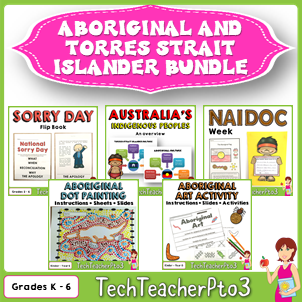
Throughout the HASS curriculum there is an element of exploring and recognising community celebrations both within Australia and in other countries. You can find these products and more at the products linked below.

NAIDOC Week activities you can use in your classroom to celebrate Aboriginal and Torres Strait Islander achievements. Easy ideas for the primary classroom teacher.

NAIDOC Week activities you can use in your classroom to celebrate Aboriginal and Torres Strait Islander achievements. Easy ideas for the primary classroom teacher.

NAIDOC Week activities you can use in your classroom to celebrate Aboriginal and Torres Strait Islander achievements. Easy ideas for the primary classroom teacher.

4 Ways to write a good report on that difficult student

Report writing for primary school teachers. How to write a good report on that difficult student. Ideas and hints that primary teachers will love!


Let's face it. Writing report cards suck! They take valuable time away from family life and frankly tell little lies. Let's be honest.. Little Johnny does not struggle to "...make the correct choices in class sometimes", he's a total pain in the butt 99% of the time! But there are no bad students - just little daily challenges...right? Sadly, what you really want to say to parents you're unable to and frankly they don't want to hear it either. You could write all day about that perfect student but the difficult ones are often another matter.

Report cards must be done. So what to write and how do you say what you want to say in a positive non-offensive way?

Listed below are my all time favourite report card comments for... that difficult child in your class (you know THE one).

1. The student that talks all the time.

Report writing for primary school teachers. How to write a good report on that difficult student. Ideas and hints that primary teachers will love!


This child could talk underwater, or so its seems. Doesn't matter where you move them in the classroom, they will always find somebody else to talk to. Heck they will even talk to themselves if they have to!

The key words to use: "is learning to"

What to write:

[Student] is learning to manage their time more efficiently in class....
[Student] is learning to follow the classroom rules and is developing good self-regulating skills...
[Student] sometimes needs a rule reminder to stay on task but is learning to listen to others...

2. The student who is always off task.

Report writing for primary school teachers. How to write a good report on that difficult student. Ideas and hints that primary teachers will love!


Doesn't matter which subject or activity they are supposed to be doing. They are off doing something else on the other side of the room or are disrupting other students.

The key words to use: "with support"

With support [Student] is developing self-monitoring skills to enable them to stay on task....
With support [Student] is beginning to stay on task with activities until completed....
With support [Student] is learning to complete tasks in a timely manner and to an acceptable standard...

3. The student that doesn't want to work in groups.


Report writing for primary school teachers. How to write a good report on that difficult student. Ideas and hints that primary teachers will love!


You take a great deal of effort to place this child in the correct group. The right number of boys/girls, at least one high achieving student, differentiated in all the right places - and they refuse to work in the group. They won't even work in a pair unless cajoled for hours.

The key words to use: "finds it difficult"

[Student] finds it difficult to participate in group work and prefers to work alone...
[Student] finds it very difficult to work with others and prefers to work alone...

4. The student that has messy work/desk or is always disorganised.


Report writing for primary school teachers. How to write a good report on that difficult student. Ideas and hints that primary teachers will love!


This student loses the letter home within moments of getting it. They lost their library book the first week and haven't been able to borrow for a whole semester. Their desk looks like a rubbish dump and their writing is atrocious.

The key words to use: "goal/s"

[Student] could work on the goal of improving the presentation of their written work...
[Student] sometimes presents their work in a tidy manner but could work on the goal of keeping their work area tidy...

No matter what you say, always end on a positive note.

A Student: [Student]'s commitment to their work and positive attitude are reflected in their marks.
B Student: [Student] has worked hard this year and this is evident in their academic achievements.
C Student: However, [Student] has shown great improvements in their academic work.
D Student: [Student] is beginning to develop sound academic skills.
E Student: With support, [Student] is learning to work towards academic goals.


Report writing for primary school teachers. How to write a good report on that difficult student. Ideas and hints that primary teachers will love!

Report writing for primary school teachers. How to write a good report on that difficult student. Ideas and hints that primary teachers will love!