Is a work-life balance possible for teachers?

Teacher work-life balance. Can teachers manage the stress and workload of teaching in today's modern classroom?

We've all heard the term 'work-life balance' but how realistic is it for teachers?

Teachers. By their very nature give until they have nothing left.

Gone are the days a teacher could just coast along with their lessons and if a student was failing it was their own fault for not listening in class.

Teaching is now run like a business with data cycles, data analysis and monthly reviews. 

In some ways this makes sense. Why shouldn't teachers be held accountable just as every other profession is held accountable for their work? Data cycles, for example, can prove to be very useful in identifying learning areas that need re-teaching.

However teaching, unlike other professions, requires so much more from its employees. Teachers are paid a salary (not as much as you'd think) to work an unlimited amount of hours. Most teachers I know start work at 7 am and don't leave work till 5 pm and those who do leave before then always bring a bag of work home with them. Most teachers are spending their Sundays lesson prepping or marking... and data gathering. 

If you're new to teaching or are not a teacher, let me list the workload for you:

Teaching: this, most people would believe, is the majority of the teacher's workload and in some ways they are correct. Teaching is what happens between 8.45 am and 3 pm. Administrative work must wait during this time.

Data gathering and lesson preparing: this occurs in between lessons and lunch breaks, before or after school hours. Many teachers forgo breaks or talking with colleagues in exchange for tackling the mountain of paperwork building up in their classrooms. Whereas other professionals would gather this data during their work day, teachers are required to do this in their own time outside of teaching hours. 

Each week teachers need to gather data on (some not all):
  • English pre and post test data
  • Spelling pre and post test data
  • Maths pre and post test data
  • Reading data (all students tested twice a year, each test taking approximately 10 minutes and often repeated multiple times for students that keep passing each level - undertaken during lesson time)
  • STEM data
  • STEAM data
  • HASS pre and post test data
  • Science pre and post test data
Teachers are supposed to know where every student is placed on an A-E scale, where they need more work, who they should differentiate for and how/when this is to occur and most teachers have between 25-30 students in their class. 

Teachers should communicate with parents weekly about any difficulties their child could be having (again in their own time outside of school hours) and often they are left to deal with difficult and demanding parents alone without support or guidance.


This is a LOT of extra work and is the reason a lot of teachers are leaving the profession within their first 5 years. Teachers are only human and the stress that this can place on a teacher is more than many can carry. Add to this stress any additional outside pressures with family and you have the makings of a breakdown - just read Gabbie Stroud if you need any more convincing.

This does not mean teachers are weak. They are simply overloaded with work based on the number of hours they have to achieve this workload. Often they cannot meet these expectations and, as teachers are somewhat perfectionists, they blame themselves. As you read this, you will probably already know a teacher that is struggling under the weight of work pressures or perhaps that teacher is you.

Teacher work-life balance. Can teachers manage the stress and workload of teaching in today's modern classroom?


I have come to the conclusion that teaching must take a backseat to life. I recall moaning to a non-teacher once that I couldn't call in sick as it would mean so much extra work, their response was 'just call in sick who cares'.. teachers care. This is the crux of the problem. We care until we crash and burn - and then we blame ourselves. 

Family must come before teaching. I can't stress this enough. Teaching, at the end of the day, is just a job and you are only human. If you're feeling overwhelmed, like I have done this week, please take a step back and look at what is important. Your family needs you well. Take a breath, take a break and step away if you must. There will ALWAYS be marking and data to collect but you cannot do it all and nor should you try. We need to send a message to our managers that there is a gap between expectation and reality.

Teachers. You are enough.

Teacher work-life balance. Can teachers manage the stress and workload of teaching in today's modern classroom? #techteacherpto3 #foundationintofirst #blogpost #teacherblog

How to make Whisper Phones

How to make Whisper Phones. Teaching reading to early years students. Primary school students reading centers/centres.

Whisper phones. If you've never tried them, you're missing a trick! Students just love them! 

If you've never heard of them, let me tell you all about them, how to make them and how you can use them to help students in your classroom.

What they are?

Whisper phones are plastic tubing that students hold to their ear and whisper into to hear their own voice. They work particularly well in a busy classroom as students can literally whisper words into them and can hear themselves clearly in the classroom. 
How to make Whisper Phones. Teaching reading to early years students. Primary school students reading centers/centres.


How you make them?

Whisper phones are so easy to make. I actually went to Bunnings hardware store (but any hardware store would have them) and grabbed some pieces of plastic plumbing tubes. I then asked a Bunnings employee to show me where the elbows were to fit those pipes. Once I had enough elbows for each end, I asked the staff member if they would cut them for me. I'm not sure if they normally do this, or they felt sorry for me! However, he cut them into roughly 10 cm lengths. I had a few pieces which were smaller  but that ended up working out just fine for those smaller students. I then used some colourful tape (from Kmart) to decorate them. 
How to make Whisper Phones. Teaching reading to early years students. Primary school students reading centers/centres.


How to make Whisper Phones. Teaching reading to early years students. Primary school students reading centers/centres.


How do they work in the classroom?


My Prep students use them during Guided Reading groups. Whenever they are required to read quietly to themselves, they grab a whisper phone and hold it up to their ear. This keeps the classroom noise to a minimum and encourages reluctant readers. I use my Guided Reading Emergent Reader Cards with my whisper phones and my rotations run much more smoothly. 

I have seen older students use them when proofreading their work, so they're not limited to Prep/Grade 1 students. How do YOU use them? Answer in the comments below. 

How to make Whisper Phones. Teaching reading to early years students. Primary school students reading centers/centres.
How to make Whisper Phones. Teaching reading to early years students. Primary school students reading centers/centres. #foundationintofirst #techteacherpto3 #whisperphones #reading #teaching


How much can you control as a teacher?

How much can you control as a teacher? What is within your control and what is out of your control? what is worth stressing about what should you try to let go of?

As we roll into a new year, I've been reading some fantastic books (Girl Wash Your Face) and inspirational quotes about how to live your best life.

I've seen many control diagrams about the things you can and cannot control and felt I should apply these to teaching. All teachers know there are SO MANY things you cannot control but because teachers are passionate about teaching, we often beat ourselves up about things that are, perhaps, out of our control.

How much can you control as a teacher? What is within your control and what is out of your control? what is worth stressing about what should you try to let go of?


Here are my list of things you can and cannot control. I'd love to know if you think I should add to this?

WHAT I TEACH

You cannot control the curriculum you are set, however you can control how you teach that curriculum. Okay, it's boring, it's dry, it's not particularly 'student friendly' but how can you make it engaging for students? What can you do, with that curriculum, to make learning fun?

'Nothing!' I hear you say..

However, if you're a teacher, you're creative. Good teachers take bad curriculum and make it work in the classroom. You might not like it but you MUST not show that to students.

'Oh wow! We're studying Federation! Hurray!' - okay you get my point.

How much can you control as a teacher? What is within your control and what is out of your control? what is worth stressing about what should you try to let go of?

HOW I TEACH

Even the most experienced teacher has a disastrous lesson from time to time. Nobody is a perfect teacher, everybody is still learning their craft right up until they leave teaching. So the lesson didn't go as planned... what's new? Learn from it, improve it next time, get that behaviour in the class under control, remember all the rules you learnt at teacher college. You cannot always control outside influences during your lesson but you can control the standard you set for yourself and your students.


How much can you control as a teacher? What is within your control and what is out of your control? what is worth stressing about what should you try to let go of?

WHEN I TEACH

The amount of teaching time you are given for subjects is often so tightly formulated by a whole school timetable with reading groups, specialist lessons and assemblies - that you are often left to shoehorn subject matter into a smaller and smaller amount of time. Again, this is where your flexibility and creativity need to shine. What WILL you teach in that time given? What areas do your students need to work on to meet the learning objective? See my previous blog post about managing and collecting student data to indicate areas you need to teach. The amount of teaching time might be out of your control but what you DO with that time is up to you.

How much can you control as a teacher? What is within your control and what is out of your control? what is worth stressing about what should you try to let go of?


HOW OTHERS FEEL ABOUT MY TEACHING

Schools are full of teachers with different backgrounds and teaching experiences. You're not here to make friends (although that does make teaching fun), you're not here to impress any other teachers. What you do in YOUR classroom is YOUR business. If others don't like it, too bad. Do your own thing. I wrote a useful blog post here about working in toxic teams. If other teachers are making you feel inadequate or you're making them feel inadequate - that's unfortunate. It would be nice if everybody got along and agreed with everything you did but it is not within your scope of control to make them feel a particular way about you.

How much can you control as a teacher? What is within your control and what is out of your control? what is worth stressing about what should you try to let go of?


THE STUDENTS IN MY CLASS

The students you are given to teach are rarely within your control (sometimes there are special circumstances for being given a particular student) but how you treat those students is very much within your control. Their learning abilities will vary, their engagement will come and go and their behaviour will sometimes be good and sometimes it will be downright annoying. If you have set behaviour standards in your classroom and reinforced those regularly and consistently, then sometimes you have done as much as you can to control the issue. I read somewhere, that teachers should keep students engaged all the time. I do not believe that is humanly possible. Students, like adults, have various levels of interest in particular topics, combined with how tired they are (did they even sleep last night?) and their skill level (and willingness to try new things) will all dictate how engaged they will be in a lesson.

You cannot always control how engaged students are or how much they participate in the learning activity but you can control how you treat students, the words you use and the feeling you impart about 'learning' to them and how interesting you make the lessons.

How much can you control as a teacher? What is within your control and what is out of your control? what is worth stressing about what should you try to let go of?


IF PARENTS LIKE YOU

This is a big one. It's one I struggle with so often and I have to keep telling myself 'not everybody will like you' - it isn't so much that I'm a people-pleaser but I do try so very hard with my students that when parents complain constantly I do take it to heart. Some parents, no matter what you do, will believe YOU are the problem and nothing you say or do will change that. This is not something you can control. You can control how you engage with them and how often, but you cannot make a parent like you  if they are determined you are bad for their child. Often parents listen to gossip about previous students, or misinterpret communication and will set themselves against you. There is really nothing you can do. The customer, in this instance, is NOT always right. You are a human being with feelings and it's unfortunate they may not like you as their child's teacher, but it not within your control to force parents to like you.

How much can you control as a teacher? What is within your control and what is out of your control? what is worth stressing about what should you try to let go of?

I really would love to know what I should add to this diagram about the things I can/cannot control. What do you think?

How much can you control as a teacher? What is within your control and what is out of your control? what is worth stressing about what should you try to let go of?

Setting up your classroom for a productive new year

Setting up your classroom for a productive new year. Back to school decor ideas that are purposeful and don't over stimulate your students. #foundationintofirst #teacherblog #decor #backtoschool

Setting up your classroom can be daunting and fun. The thrill of decorating and creating a stimulating learning space is all new teachers can think about (and a lot of not-so-new teachers as well!) but how do you make sure it is not OVER stimulating?

I've been in some classrooms that have been Pinterested-to-death. Every idea, every thought the teacher has seen has been stuffed into that classroom. I even saw a classroom with flashing fairy lights around the board! Classroom decor should enhance the classroom, keep it feeling homely but should not over stimulate the students. This will allow students the space to think... and we want them to think, not be told what to think all the time.

My personal rule for classroom decor is:
  • keep it simple
  • keep it purposeful
  • keep 50% or more of the wall space for student work
Here is a snapshot of my classroom and the resources I use (shown below).

Student Name Plates (a MUST for the first day)

Setting up your classroom for a productive new year. Back to school decor ideas that are purposeful and don't over stimulate your students. #foundationintofirst #teacherblog #decor #backtoschool

KEEP IT SIMPLE

Keep fonts bold, big and easy to read. That running writing font across the top of the whiteboard might look pretty in a show home but in a classroom it can be a huge distraction as students try to figure out what it actually says! I do love a bit of cursive though, but use sparingly in early grade classrooms. Overwhelming fonts and colours can also be a big distraction. Pick a colour scheme and try to stick to two or three colours. This will bring your classroom together in a calming way but keep things fun! 

Setting up your classroom for a productive new year. Back to school decor ideas that are purposeful and don't over stimulate your students. #foundationintofirst #teacherblog #decor #backtoschool

Watch your hanging space. Some students, especially those with attention or sensory issues, can find flapping paper very distracting, even upsetting. I've found using my hanging space only for seasonal celebrations, as the wonderful mrsc_in_year3 has done for Australia Day (below), is a good way to display student work. Once the season is over, pull it down and give students a break from hanging material. When you DO put some more up, it will be far more engaging and exciting for students if it isn't done too regularly. 


Setting up your classroom for a productive new year. Back to school decor ideas that are purposeful and don't over stimulate your students. #foundationintofirst #teacherblog #decor #backtoschool

KEEP IT PURPOSEFUL

That alphabet chart across the top of the whiteboard...see how pretty it is? Why is it there? Unless you're referring to it throughout the day, then it's just another distraction. Don't get me wrong, I LOVE some pretty alphabet posters, but use them wisely. We're aiming for minimal distraction. 

Word walls are a great idea, but do not put every word on them at the start of the year, otherwise they are pointless. As you come to one of those words, then purposefully place that word on the word wall, this way students will make a connection to the context of that word, and be able to refer back to the wall for spelling and contextual clues. 

Rules. They are one absolute MUST of any classroom, but where do you place them? I've personally found that they are of most use at locations of, shall we say, conflict. So the 'no running' poster sits near the door, so they can read it on the way out to break as a rule reminder. The 'whole body listening' poster work will near the whiteboard as a rule reminder. Be strategic. For more on setting up classroom rules click here.

Setting up your classroom for a productive new year. Back to school decor ideas that are purposeful and don't over stimulate your students. #foundationintofirst #teacherblog #decor #backtoschool


KEEP 50% OR MORE OF THE WALL SPACE FOR STUDENT WORK

At the start of every year I see teachers falling into the trap of covering their walls with beautiful artwork they have made themselves. To students, this tells them that a) their work couldn't possibly compare to the perfection of your work and b) it's not their classroom - it's your classroom. 

Students need to feel ownership of their space at the start of the year and refresh that work on the walls throughout the year. The space is theirs, not yours. When students have ownership of classroom space they are more compelled (I've found from my own experience) to take better care of it.  Classroom Jobs also help students to feel a sense of ownership.

What do you think? Does your school have a 'less-is-more' approach to decorating your classroom? I'd love to know in the comments. 

Setting up your classroom for a productive new year. Back to school decor ideas that are purposeful and don't over stimulate your students. #foundationintofirst #teacherblog #decor #backtoschool


Teaching Aboriginal Country and Place

Teaching Aboriginal and Torres Strait Islander understanding of Country and Place. Teaching tips for early year primary teachers or Year 1 Geography aligned to the Australian curriculum.

The Australian Curriculum (ACARA) tells primary teachers that they must teach children about Aboriginal peoples and Torres Strait Islander peoples history and culture.

In Foundation Year ACARA expects teachers to explain the concepts of Country and Place to 4 and 5 year old children. However, most non-indigenous teachers are struggling with these concepts themselves!

So what do you do? How do you teach something so complex to little learners whilst still meeting the ACARA objectives?

Let me run you through the basics...

TERMINOLOGY

I have worked with many Aboriginal elders in my time as a teacher and researcher for the government and most tell me they do not have any particular issue with the term Aboriginal. The term actually means "inhabiting or existing in a land from the earliest times or from before the arrival of colonists" so Aboriginal can refer to Native Americans and to Australian Aboriginals.

The term 'indigenous' is no longer acceptable to use when referring to Aboriginal peoples.

It is important to always say Aboriginal peoples and Torres Strait Islander peoples as these two groups are very distinct from one another. You can read more about this here.

WHAT IS COUNTRY?

Teaching Aboriginal and Torres Strait Islander understanding of Country and Place. Teaching tips for early year primary teachers or Year 1 Geography aligned to the Australian curriculum.

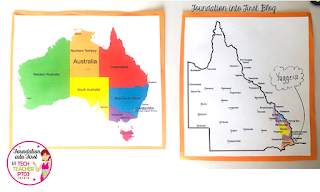
The reason why it is so difficult to define an Aboriginal person as 'an Aboriginal' is because most Aboriginal peoples identify themselves with the tribe or part of Australia their family ancestry stems from. For example, a person might refer to themselves as a "Yuggera woman" or say "I'm a Simpson of Gamilaraay Country".  Belonging to Country (always with a capital C) is important to Aboriginal peoples. You will find a fantastic map outlining all the tribes around Australia here (it's important to note these boundary lines often change with changes to Native Title claims). Always seek clarification from your Aboriginal elder.

Teaching Aboriginal and Torres Strait Islander understanding of Country and Place. Teaching tips for early year primary teachers or Year 1 Geography aligned to the Australian curriculum.

Teaching Aboriginal and Torres Strait Islander understanding of Country and Place. Teaching tips for early year primary teachers or Year 1 Geography aligned to the Australian curriculum.

This may all feel like semantics but what we are teaching children is that it is important to be culturally aware.

WHAT IS PLACE?


Teaching Aboriginal and Torres Strait Islander understanding of Country and Place. Teaching tips for early year primary teachers or Year 1 Geography aligned to the Australian curriculum.

The meaning of 'Place' is far more complicated than just naming a place you might visit or live in. To Aboriginal peoples 'Place' means to have a spiritual, physical, social and cultural connection to the land. Aboriginal connection to the land is through every animal, tree, mountain, river and rock, it is a constant place of learning. Aboriginal people consider themselves custodians of the land, not owners as such. Click this link to watch a wonderful video of an Aboriginal elder discussing the concept that the '... land owns us" rather than 'we own the land'.

Teaching Aboriginal and Torres Strait Islander understanding of Country and Place. Teaching tips for early year primary teachers or Year 1 Geography aligned to the Australian curriculum.

So why discuss Country and Place with young students?

Humanities and Social Sciences (HASS) aims to build a student's understanding of Australian history through the exploration of its first peoples. By the time a Foundation Year student reaches upper primary they have the groundwork complete on the importance of Country and Place to Aboriginal peoples.

HOW DO YOU TEACH THESE CONCEPTS TO FOUNDATION YEAR STUDENTS?

Teaching Aboriginal and Torres Strait Islander understanding of Country and Place. Teaching tips for early year primary teachers or Year 1 Geography aligned to the Australian curriculum.

The same way you teach all of their other subjects - by keeping it fun and engaging!

Teaching Aboriginal and Torres Strait Islander understanding of Country and Place. Teaching tips for early year primary teachers or Year 1 Geography aligned to the Australian curriculum.

It is crucially important to get advice from your local Aboriginal elder or Torres Strait Islander elder. They will be able to tell you which tribe has native title to the land your school is located on (most schools already have a strong connection with their local elder). Invite the elder to your school or contact the local authority within your area to get confirmation of:
  • who has native title in your area?
  • which languages are spoken in your area? (some areas cross over boundaries of tribes or languages)
  • what the local sites of historical importance are?
  • what is the local history of your area?
You will find a wealth of information on this at this website

You'll also find teaching materials shown in this post within the Foundation Year Geography pack.

Teaching Aboriginal and Torres Strait Islander understanding of Country and Place. Teaching tips for early year primary teachers or Year 1 Geography aligned to the Australian curriculum. #foundationintofirst #techteacherpto3 #aboriginal #torresstraitislander